
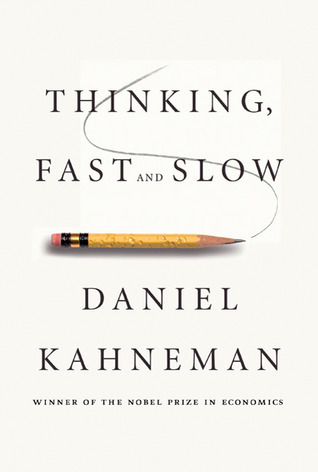
Author
Daniel Kahneman (1934–2024) was an Israeli-American psychologist and Nobel laureate known for his pioneering work in behavioral economics and cognitive psychology. Born in Tel Aviv, he spent much of his later career at Princeton University. A great deal of the research behind this book was developed with his long-time collaborator, Amos Tversky. In 2002, Kahneman was awarded the Nobel Prize in Economic Sciences for having brought psychological insight into the study of judgment and decision-making. His research, particularly on Prospect Theory and cognitive biases, has profoundly influenced our understanding of human decision-making. His book “Thinking, Fast and Slow”, first published in 2011, is a widely acclaimed exploration of how our minds work.
Summary
“Thinking, Fast and Slow” by Daniel Kahneman is a deep dive into the psychology of human thought processes, where Kahneman presents his groundbreaking research on how we make decisions.
The book is structured around two systems of thinking:
- System 1 operates automatically and quickly, with little or no effort. It’s our “gut reaction” system, responsible for instinctual and emotional responses.
- System 2 allocates attention to the effortful mental activities that demand it, including complex calculations and conscious reasoning. This system is slower, more deliberate, and logical.
Kahneman illustrates how these systems influence our decisions, often leading to cognitive biases—systematic errors in thinking. For instance, he discusses:
- Anchoring: The tendency to rely too heavily on the first piece of information encountered when making decisions.
- Loss Aversion: The idea that people prefer to avoid losses rather than acquiring equivalent gains. This idea sits at the heart of prospect theory, which he developed with Tversky, and which describes how people evaluate gains and losses relative to a reference point rather than in purely rational terms.
- The Availability Heuristic: How easily we can recall something influences our perception of how likely it is to happen.
Throughout the book, Kahneman draws on decades of research to show how these mental shortcuts can lead to flawed judgments in various contexts, from everyday decisions to professional choices. He also writes about overconfidence, and about the difference between the “experiencing self,” which lives through a moment as it happens, and the “remembering self,” which later turns that moment into a story. He also touches on how understanding these biases can improve decision-making in areas like business, policy, and personal life.
“Thinking, Fast and Slow” not only reveals the intricacies of the human mind but also offers practical insights into how we can think more critically and make better decisions. It’s a seminal work that has had a significant impact on psychology, economics, and beyond.
Personal opinion
“Thinking, Fast and Slow” offers a wealth of information, covering a broad range of topics in a well-structured manner. As a non-native English speaker, I found the language challenging, requiring significant attention to fully grasp the concepts. Some passages I had to read more than once before the argument really settled, not because the book is careless, but because the ideas themselves are dense.
It’s not an easy read, but the insights it provides are incredibly valuable and well worth the effort for anyone interested in understanding how we think and make decisions. If you are prepared to go slowly, that effort pays off.
Get the book: https://amzn.to/4drgevq







Leave a Reply