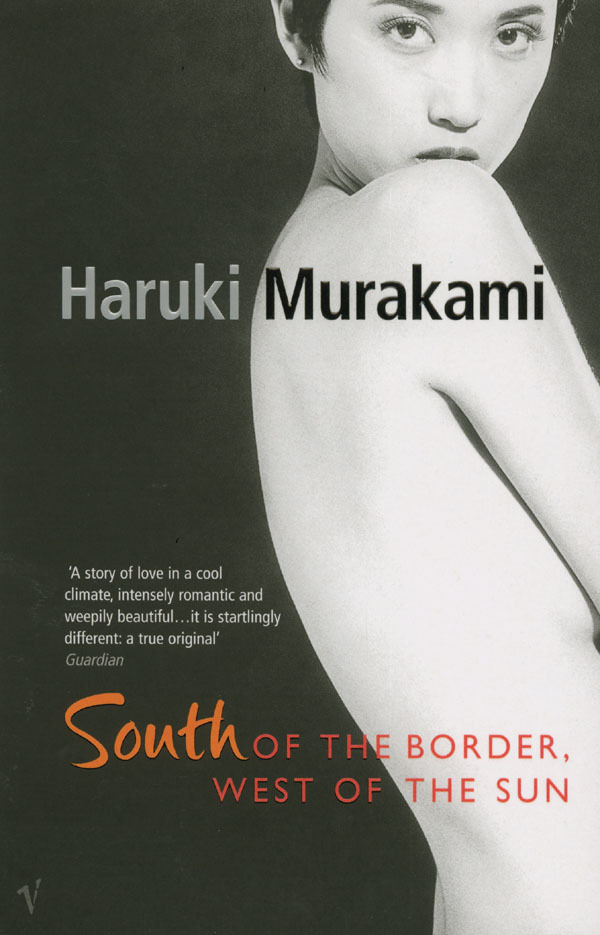
Author: Murakami didn’t start writing until he was 29. The idea struck him out of nowhere during a baseball game in 1978, and he went home that night to write his first novel.
He wrote this specific novel in 1992 while he was a visiting scholar at Princeton University in the United States. Living abroad gave him a new, distant lens through which to view his home country. Before his writing career took off, he and his wife ran a jazz bar in Tokyo called “Peter Cat” for seven years, a detail that often finds its way into his fiction, including this novel.
Summary: South of the Border, West of the Sun is one of Murakami’s most grounded and realistic novels, a stark departure from the magical realism found in works like Kafka on the Shore. It tells the story of Hajime, a man whose life is defined by the feeling of being incomplete.
The narrative follows Hajime from his boyhood in post-war Japan to his prosperous but emotionally hollow middle age. As an only child in an era of large families, he always felt like an outsider . This changed when he met Shimamoto, a quiet, intense girl who was also an only child. They formed a deep, unspoken bond, spending hours listening to records like Nat King Cole’s “South of the Border”. When she mysteriously disappears from his life, she takes a piece of his soul with her.
Years later, Hajime has built a conventional life: he is a husband, a father of two, and the successful owner of two jazz bars in Tokyo . He is content, if not truly happy. Then, one rainy evening, Shimamoto walks back into his bar and his life. She is even more beautiful and enigmatic, but reveals nothing about her past or where she has been . Her reappearance reignites his dormant obsession, forcing Hajime to confront a dangerous choice: cling to the reality he has built, or risk everything for the ghost of a perfect love from his past.
Personal Opinion: Reading South of the Border, West of the Sun left me with a peculiar feeling of incompleteness. Usually, an open ending in a novel feels like a deliberate space—a canvas left for the reader’s own imagination and interpretation. Here, it felt different. It felt not like an opening up, but like an abrupt severing, as if the story was simply discarded rather than concluded. Many plot threads, particularly the mysteries surrounding Shimamoto’s life and wealth, are introduced with great fanfare only to be left completely unresolved, which feels less like artistry and more like an oversight.
What I genuinely admired, however, was Murakami’s masterful use of symbolism throughout the narrative. The motif of water, for instance, is woven through the story with incredible precision: Izumi, whose name means “spring,” represents a pure, life-giving source that Hajime pollutes; Shimamoto is always accompanied by rain, elusive and hypnotic; and by the end, Hajime feels like a dried-out wasteland . The title itself is a beautiful symbol—”south of the border” representing a reachable dream, and “west of the sun” an unreachable, almost mythical place of no return.
I also couldn’t shake the feeling that this book is deeply personal, almost a direct line into Murakami’s own psyche. The protagonist running a jazz bar, his mid-life reflections, and the quiet domesticity all feel like they are pulled from the author’s biography.
Despite this, I found Hajime’s justifications for his actions to feel hollow and performative. He clings to the fleeting moments of his childhood as the defining core of his identity, using them as an excuse to disrupt the lives of everyone around him. His obsession with Shimamoto didn’t feel like a profound, soul-deep love, but rather a desperate attempt to find an external reason for his own internal emptiness. He wasn’t searching for her; he was searching for an excuse, and he latched onto her memory to justify his own inability to find contentment in the present.









Leave a comment