
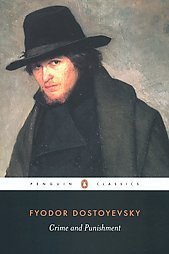
Author: Fyodor Mikhailovich Dostoevsky (1821–1881) was a Russian novelist, philosopher, and one of the most influential writers in world literature. He is best known for exploring human psychology, morality, free will, and existential conflict in his works.
Dostoevsky was born in Moscow and initially trained as an engineer before turning to writing. His early success was interrupted when he was arrested for involvement in a political discussion group. He was sentenced to death, but the execution was dramatically halted at the last moment. Instead, he was exiled to a Siberian labor camp—an experience that deeply shaped his worldview and later writing.
His novels are known for their deep psychological insight and philosophical depth, often focusing on characters facing moral dilemmas, guilt, and inner conflict. Among his most famous works are Crime and Punishment, The Idiot, Demons, and The Brothers Karamazov. These books examine themes such as justice, faith, suffering, and redemption.
Dostoevsky’s writing style is intense and character-driven, often presenting complex inner dialogues and emotional extremes. His influence extends far beyond literature, shaping modern psychology, existential philosophy, and writers around the world.
Summary: Crime and Punishment follows Rodion Raskolnikov, a former student living in poverty in Saint Petersburg. Struggling financially and increasingly isolated, he develops a plan to murder an elderly pawnbroker, whom he believes to be exploitative and insignificant. He carries out the crime, killing her with an axe, but unexpectedly also kills her sister Lizaveta, who enters the room during the act.
After the murders, Raskolnikov falls into a state of physical illness and mental distress. He attempts to continue his life as normal but becomes increasingly anxious and suspicious. At the same time, he reconnects with people in his life, including his friend Razumikhin, his mother, and his sister Dunya, who has her own difficulties involving a man named Luzhin.
Raskolnikov also meets Sonia Marmeladova, a young woman forced into prostitution to support her family. Through their interactions, Sonia becomes an important figure in his life as he struggles with the aftermath of his actions.
Meanwhile, Porfiry Petrovich, the investigating magistrate, begins to suspect Raskolnikov’s involvement in the murders. Through a series of conversations and indirect questioning, Porfiry applies psychological pressure, attempting to lead Raskolnikov toward confession without direct accusation.
As the story progresses, Raskolnikov’s behavior becomes increasingly erratic. He faces internal conflict while external circumstances tighten around him. Eventually, influenced by Sonia and his own deteriorating state, he confesses to the crime.
The novel concludes with Raskolnikov being sentenced to penal servitude in Siberia, where Sonia follows him. The story ends with the beginning of his life in exile.
Personal Opinion: Crime and Punishment is an amazing and exceptionally well-written novel that fully lives up to its reputation as a classic of world literature. Despite its length, the story remains captivating throughout, constantly pulling you deeper into Raskolnikov’s world and making you want to keep reading.
What stands out the most is the remarkable psychological depth. Dostoevsky explores the inner struggles of his characters with such intensity and precision that their thoughts and emotions feel incredibly real and immediate. The narrative is not only about events but about the mental and emotional states behind them, which makes the reading experience both engaging and immersive.
Overall, Crime and Punishment is a powerful and compelling novel that combines a gripping storyline with profound psychological insight, making it a truly memorable read.






 BooksTerra
Leave a comment