
Author: Haruki Murakami (born in 1949) Before becoming a writer, Murakami ran a jazz bar in Tokyo for seven years. The idea of writing a novel struck him completely out of the blue while watching a baseball game in 1978. He simply thought, “I could write a book,” and went home that night to start his first novel. I was surprised to find out that Murakami is a serious long-distance runner and triathlete. His disciplined routine, namely, waking at 4 a.m. and running 10 kilometers a day, is a stark contrast to the melancholic, nocturnal lives of his characters .
After living in Europe and the United States for several years, Murakami began to see his home country differently. He famously stated that living abroad allowed him to view Japan “from a distance,” making it easier to write about his homeland and its people objectively.
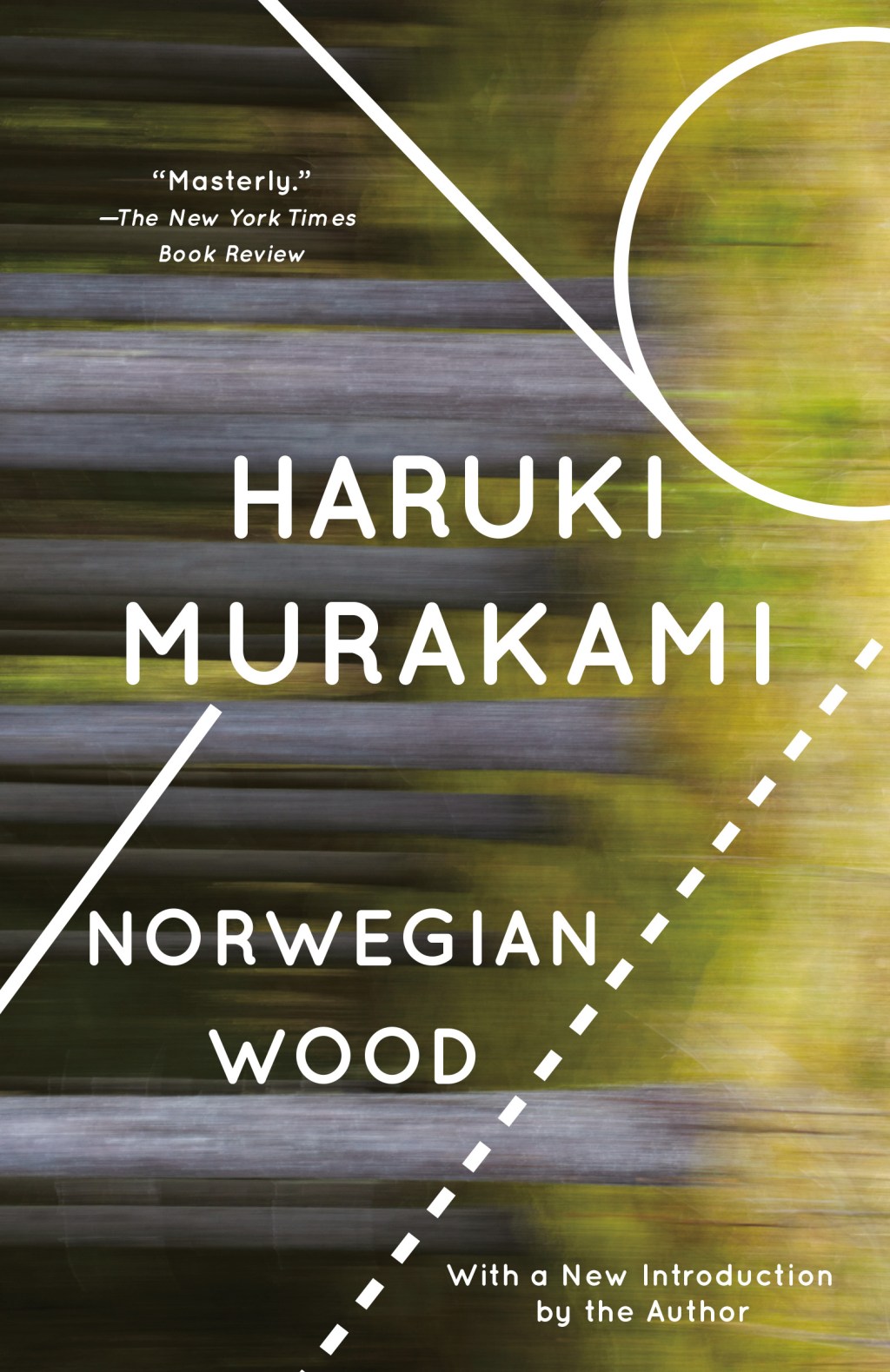
Summary: Norwegian Wood is a poignant and melancholic coming-of-age story that catapulted Murakami from a respected author to a literary superstar in Japan. The novel opens with 37-year-old Toru Watanabe hearing an orchestral cover of The Beatles’ song “Norwegian Wood” aboard a plane, which instantly transports him back to his turbulent college days in late 1960s Tokyo.
The story centers on Toru’s complex relationship with two very different women. First is Naoko, a beautiful and emotionally fragile young woman who was the girlfriend of Toru’s best friend, Kizuki. When they were seventeen, Kizuki committed suicide without any obvious reason, an event that haunts both Toru and Naoko. Drawn together by their shared grief, they struggle to connect, but Naoko’s mental state deteriorates, leading her to a secluded sanatorium in the mountains.
While Naoko is away, Toru meets Midori, a vivacious, outgoing, and fiercely independent classmate who is everything Naoko is not. She is full of life and unafraid to express her wildest desires and eccentricities, representing a potential future for Toru . Torn by his loyalty to the fragile Naoko and his growing attraction to the vibrant Midori, Toru navigates the pitfalls of first love, profound loss, and sexual awakening against the backdrop of student political unrest.
Personal Opinion: As a reader who is not deeply familiar with Japanese culture, I found the greatest pleasure in Murakami’s gentle, almost documentary-like depiction of everyday life in 1960s Japan. He doesn’t lecture you on cultural differences; instead, he weaves them seamlessly into the narrative. You absorb the atmosphere through the specific brands of whiskey characters drink, the jazz and Western pop music (like The Beatles and Billy Joel) that score their lives, the detailed descriptions of simple meals, and the geography of Tokyo’s streets and the serene, wooded landscapes of Kyoto . It creates an immersive experience that feels authentic rather than educational.
However, this quiet immersion makes the book’s darker elements all the more jarring. Unfortunately, Norwegian Wood does little to dispel, and in fact, deeply reinforces the most troubling global stereotypes about Japan. The matter-of-fact way suicide is woven into the fabric of the characters’ lives is chilling, presenting it not as a shocking aberration but as a near-logical, almost romanticized endpoint for grief.
Furthermore, the aspect that many literary reviews politely term “light eroticism” felt, to this reader, like a direct confrontation with a cultural taboo regarding sex. The sexual encounters are not merely suggestive; they are frequent, explicit, wild and often psychologically complex. Please mind it if you plan to read the book.





 BooksTerra
Leave a comment