
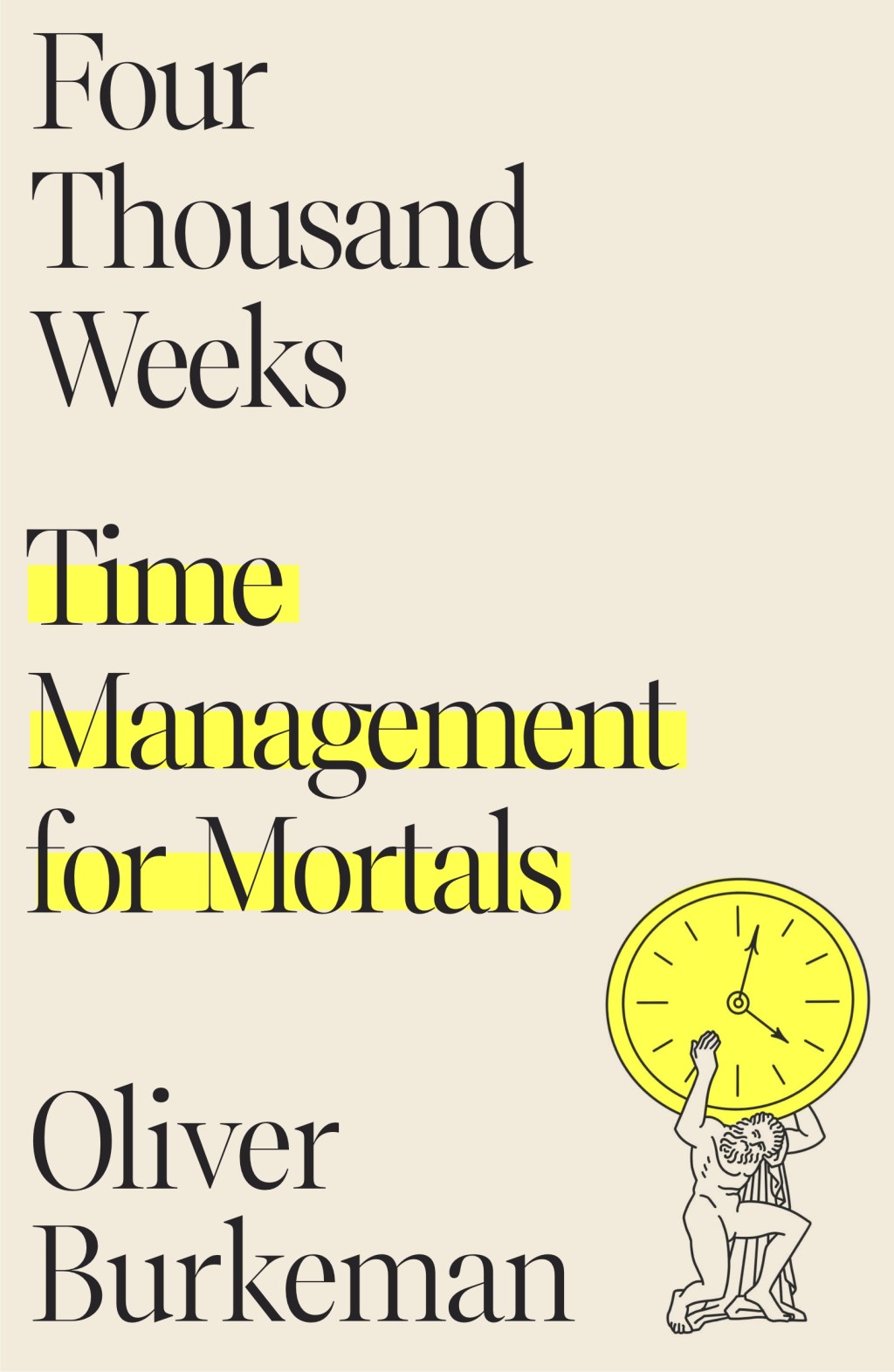
Author: Oliver Burkeman is a British author, journalist, and speaker best known for exploring themes of time, productivity, psychology, and meaning. He wrote the long-running Guardian column “This Column Will Change Your Life,” where he critically examined self-help culture and human behavior.
Born in Liverpool in 1975, Burkeman studied Social and Political Sciences at the University of Cambridge. His writing blends research, philosophy, and humor, encouraging readers to rethink their relationship with time and success.
He is the author of “Four Thousand Weeks: Time Management for Mortals” (2021) and “The Antidote: Happiness for People Who Can’t Stand Positive Thinking” (2012). Through his thoughtful and grounded approach, Burkeman has become one of the most respected voices in modern psychology and productivity writing.
Summary: In “Four Thousand Weeks”, Oliver Burkeman redefines the concept of time management by shifting the focus from efficiency and control to acceptance and meaning. The title refers to the average human lifespan — about 4,000 weeks, a finite period that forces us to confront the limits of what we can truly achieve.
Burkeman begins by challenging the modern obsession with productivity. He argues that our endless pursuit of optimization — inbox zero, perfect routines, doing it all — is a losing battle that leads to anxiety rather than fulfillment. The more we try to “master” time, the more time seems to slip away.
Instead, the book encourages readers to embrace their limitations and make peace with the fact that not everything can be done. Burkeman presents the idea that the goal of time management should not be to do more, but to do what truly matters. He introduces philosophical insights from thinkers like Seneca, Heidegger, and the Buddha to highlight the importance of presence, acceptance, and intentionality.
The book is structured around key themes, including:
- The paradox of efficiency – The faster we work, the more demands appear.
- The joy of missing out (JOMO) – True freedom comes from consciously choosing what to ignore.
- Facing finitude – Our time is limited; avoiding that fact leads to frustration and distraction.
- Choosing depth over breadth – A meaningful life is one where we commit to fewer, but richer, experiences.
Burkeman closes with the reminder that time is not a resource to be managed but a medium in which we live. By accepting our finite existence, we can live more fully, appreciate the present moment, and invest our limited weeks in what truly matters.
Personal opinion: “Four Thousand Weeks” truly surprised me with its unique perspective on time management. Unlike typical productivity books that focus on efficiency, planning, and squeezing more into your day, Oliver Burkeman takes a completely different approach — one that feels more philosophical, grounded, and deeply human. Instead of offering quick hacks or routines, he invites you to rethink your entire relationship with time.
Two sentences especially stayed with me and summarize the book’s essence perfectly:
“Being alive is pure luck, and not a single additional day is guaranteed.”
and
“We try to support the present through the future, believing we can organize things that are beyond our control, for a time we cannot be certain we’ll ever reach.”
Both lines struck me deeply. They remind us how fragile and unpredictable life is — and how often we forget to actually live in the present moment while chasing future goals.Burkeman’s message feels refreshing and humbling: you don’t need to control time; you just need to live it. For anyone tired of the constant pressure to optimize every second, this book offers a liberating new way to think about what really matters.



 BooksTerra
Leave a comment