
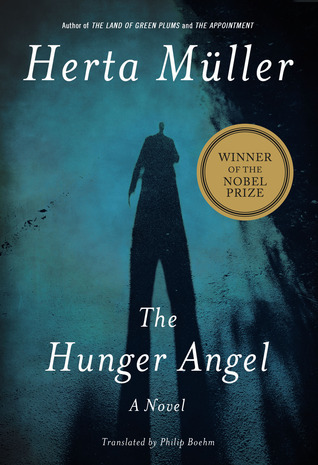
Author: Herta Müller, Nobel Prize-winning author, is one of the most powerful voices in contemporary German literature. Born on August 17, 1953, in Nitzkydorf, Romania, she grew up as part of the Banat Swabian minority. Her experiences under Nicolae Ceaușescu’s dictatorship, including persecution by the Securitate secret police, shaped her deeply impactful writing.
After emigrating to Germany in 1987, Müller became known for novels like The Land of Green Plums and The Hunger Angel, which explore themes of fear, surveillance, oppression, and exile. Her unique, poetic style vividly captures life under political repression and the lasting effects of displacement. In 2009, she received the Nobel Prize in Literature for her “landscape of the dispossessed,” cementing her place as one of the most important authors of our time.
Summary: “The Hunger Angel” tells the story of Leo Auberg, a seventeen-year-old ethnic German from Romania, who is deported to a Soviet labor camp at the end of World War II. His deportation is part of a mass expulsion of ethnic Germans accused of collaborating with Nazi Germany.
Leo’s journey begins with his arrest and transport in crowded train cars. After days of travel, he arrives at a bleak labor camp where daily survival becomes his only focus. The conditions are harsh: prisoners face extreme hunger, freezing cold, and exhausting physical labor. Leo works in coal mines, construction, and various heavy tasks, all under constant surveillance and with limited food rations.
Hunger becomes a constant companion—almost like another character—guiding his every thought and action. Daily life is reduced to a rhythm of work, meager meals, and sleep, punctuated by illness, exhaustion, and moments of quiet endurance.
Over the years, Leo adapts to the camp’s harsh reality. He witnesses the suffering and deaths of fellow prisoners, yet also moments of resilience and small acts of humanity. His memories of home and his inner thoughts sustain him through the worst periods.
After five years, Leo is released and returns home, physically changed and emotionally marked by his time in the camp. The novel closes with his attempt to rebuild his life, carrying the lasting impact of his experiences.
Personal opinion: Reading “The Hunger Angel” by Herta Müller is a powerful but challenging experience. The novel captures the brutal reality of life in a Soviet labor camp with vivid and poetic language. However, it’s not an easy book to read—not because of the topic alone, but because of its unique structure. The story is told through many short chapters, each focusing on a moment, an image, or a thought. These chapters often feel fragmented and not directly connected, which can make the reading experience demanding and sometimes disorienting.
Despite the challenging flow, the fragmented style mirrors the reality of memory and trauma, creating a haunting rhythm that stays with you. The book is emotionally intense, rewarding patient readers with a deep sense of empathy and historical insight. It’s not a casual read, but it is an important one for understanding the lasting effects of exile, labor camps, and survival.




 BooksTerra
Leave a comment