
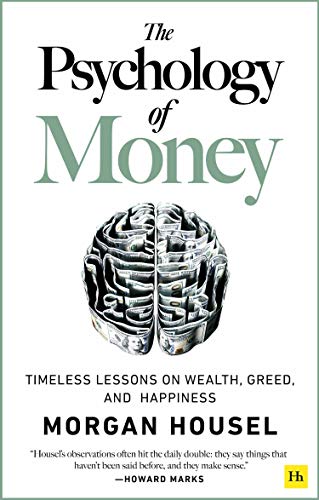
Author: Morgan Housel is a highly acclaimed financial writer and partner at Collaborative Fund, known for his groundbreaking work in behavioral finance. A former columnist for The Motley Fool and The Wall Street Journal, he has won prestigious awards including two Best in Business Awards and the New York Times Sidney Award.
He is the bestselling author of “The Psychology of Money”, a book focused on how behavior and emotion influence financial decisions, which has sold over six million copies and been translated into more than 50 languages. His insightful follow‑up, Same As Ever, continues his exploration of navigating uncertainty and change.
Housel’s writing is renowned for blending compelling storytelling with data-driven analysis, making complex financial concepts intuitive and accessible. A Seattle-based family man, he also serves on the board of directors at Markel and speaks globally on topics like long-term investing, risk, and money psychology.
Summary: Morgan Housel’s “The Psychology of Money”: Timeless Lessons on Wealth, Greed, and Happiness explores how people think and behave around money. Rather than focusing on technical financial advice or market strategies, the book examines the psychological and emotional aspects that influence financial decision-making. It argues that personal finance is more about behavior than knowledge, and that how you handle money is deeply shaped by your background, life experiences, and personality.
The book is structured around 20 short chapters, each offering a standalone lesson. Some of the key themes include:
Behavior > Intelligence
“Financial success is not a hard science. It’s a soft skill, where how you behave is more important than what you know.”
Housel argues that even highly intelligent people often make poor financial decisions because of emotional reactions or flawed thinking. Good investing isn’t about being smarter—it’s about being more emotionally stable, patient, and disciplined.
The Role of Luck and Risk
“Nothing is as good or as bad as it seems.”
One of the most profound insights is the idea that financial outcomes often involve an element of chance. Housel illustrates this with examples like Bill Gates (who went to one of the only high schools in the world with a computer lab) and counterfactuals of equally talented people who didn’t get lucky breaks. Understanding this helps temper judgment and encourages humility.
The Power of Compounding
“Good investing isn’t necessarily about making good decisions. It’s about consistently not screwing up.”
Through the story of Warren Buffett, Housel explains that Buffett’s real secret is time, not just skill. He made over 90% of his wealth after his 65th birthday. The lesson: start early, be consistent, and let time do the work.
Saving > Income
“Building wealth has little to do with your income or investment returns, and lots to do with your savings rate.”
Rather than focusing on maximizing income, the book emphasizes the value of frugality and consistent saving. You don’t need to be rich to build wealth—you need discipline and modesty.
Reasonable Decisions Trump Rational Ones
“You’re not a spreadsheet. You’re a person. A screwed-up, emotional person.”
Perfectly rational decisions aren’t always realistic or sustainable. Housel encourages people to make reasonable choices that work for their personality, lifestyle, and goals—even if they’re not optimal on paper.
Wealth is What You Don’t See
“Spending money to show people how much money you have is the fastest way to have less money.”
A powerful idea in the book is that true wealth is invisible. It’s the money not spent, the financial freedom quietly earned through restraint and wise decisions.
Freedom is the Ultimate Dividend
“Controlling your time is the highest dividend money pays.”
Housel repeatedly returns to the idea that the greatest reward of financial independence is autonomy—the ability to do what you want, when you want, with whom you want.
Personal opinion: “The Psychology of Money” is one of the better finance books I’ve read so far. It’s not only well-written and easy to follow, but also packed with practical insights and timeless advice. What stands out is how Morgan Housel focuses on the human side of finance—how our emotions, habits, and decisions shape our financial lives far more than just numbers or strategies.
The book offers valuable tips and thought-provoking perspectives without being overly technical. It encourages readers to reflect on their own relationship with money, while providing a solid framework for making better financial choices. In the end, everyone is responsible for their own financial decisions, but this book serves as a useful and reliable guideline for navigating the complex world of money.
If you’re looking for a finance book that blends psychology, real-life examples, and accessible advice, “The Psychology of Money” is a strong recommendation.





 BooksTerra
Leave a comment